How to Choose a Sustainable Faceless Recap Niche
Choose a faceless recap niche by source availability, rights complexity, research load, audience fit, revenue paths, and a small publishing test.

By the Recapo.ai Editorial Team · Fact-checked July 10, 2026
There is no evidence-based universal ranking of faceless recap niches by "copyright safety" or earning power. Copyright outcomes are fact-specific, revenue varies by channel and audience, and a topic label does not decide either result. A better niche decision starts with inputs you can document: source availability, permissions, research burden, correction risk, audience fit, revenue paths, and whether the production process is repeatable.
This guide provides that decision framework and a small publishing test. It is general information, not legal or financial advice, and it does not promise eligibility, income, or freedom from claims.
Information note: This is general information, not legal advice. Copyright outcomes depend on the facts and jurisdiction; primary sources were checked on July 10, 2026.
Official source map: For comparing faceless recap niches, the rights, Content ID, and RPM points below are tied to YouTube's fair-use guidance, Content ID documentation, YouTube's RPM definition.
Scope of this guide: This page compares sub-niches inside recap content using sourcing, rights, production, and channel economics. For non-recap faceless formats, use faceless YouTube channel ideas.
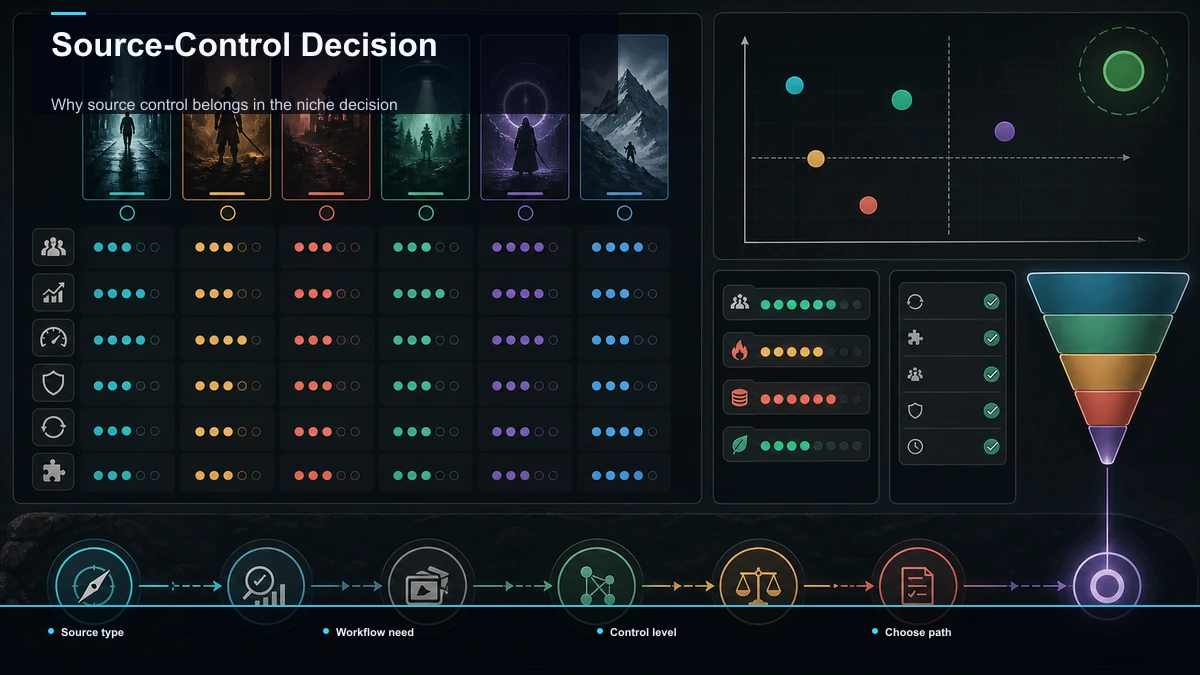
Why source control belongs in the niche decision
Two channels can cover the same topic with very different inputs. One may rely on original research, narration, screen recordings, licensed media, and verified public-domain material. Another may depend on footage, music, photographs, or text controlled by third parties. The topic alone does not decide the rights analysis; the actual material, purpose, amount used, market effect, jurisdiction, and permissions matter.
Treat source control as an operating question, not a legal score. For each planned format, list the exact visual and audio sources, who owns them, the permission or exception you rely on, and what records you will retain. Fair use and comparable exceptions are assessed case by case; a niche label cannot pre-approve a video.
Score the operating fit, not legal safety
Use a 1-3 score only for your own operational fit. Do not turn it into a percentage chance of avoiding a claim or earning a particular RPM.
- Source availability: can you obtain enough original, licensed, or verified public-domain material for ten episodes?
- Third-party dependence: how much of the format stops working if protected footage, music, artwork, or text is unavailable?
- Research and correction burden: what claims require primary sources, legal review, sensitivity review, or prompt corrections?
- Production repeatability: can you research, script, review, caption, and export at the cadence you intend to maintain?
- Audience and revenue fit: is there a clear viewer need and a plausible ad, sponsor, affiliate, membership, or product path that you can validate with real data?
- Platform-policy fit: can the finished work show meaningful original contribution under the current monetization and reused-content rules?
Score each dimension, write down the evidence behind the score, and mark unknowns for testing. An unknown is not a low score; it is a research task.
Niche patterns to test, not a universal ranking
| Original research explainers | Original script, narration, charts, screen recordings | Accuracy, citations, defamation and privacy review | Historical or archival explainers | Verified public-domain or licensed archives | Status of each item, edition, territory, and attribution | Tech and product updates | Your own demonstrations and screen recordings | Current product facts and permission for third-party assets | Business case studies | Original analysis, filings, interviews, charts | Financial claims, sourcing, corrections, sponsor disclosure | Book and long-form commentary | Original analysis and limited quotations | Edition-specific rights and a case-by-case exception analysis | Original fiction or storytelling | Material you created or licensed | Contributor agreements, music, voices, and visual licenses | News explainers | Original reporting, licensed media, cited public records | Fast fact checking, corrections, image and footage rights | Film, TV, anime, or sports commentary | Original commentary plus permitted excerpts | Permissions, platform notices, and legal review where needed |
This table describes production inputs. It does not rank legal outcomes, audience size, RPM, or enforcement behavior.
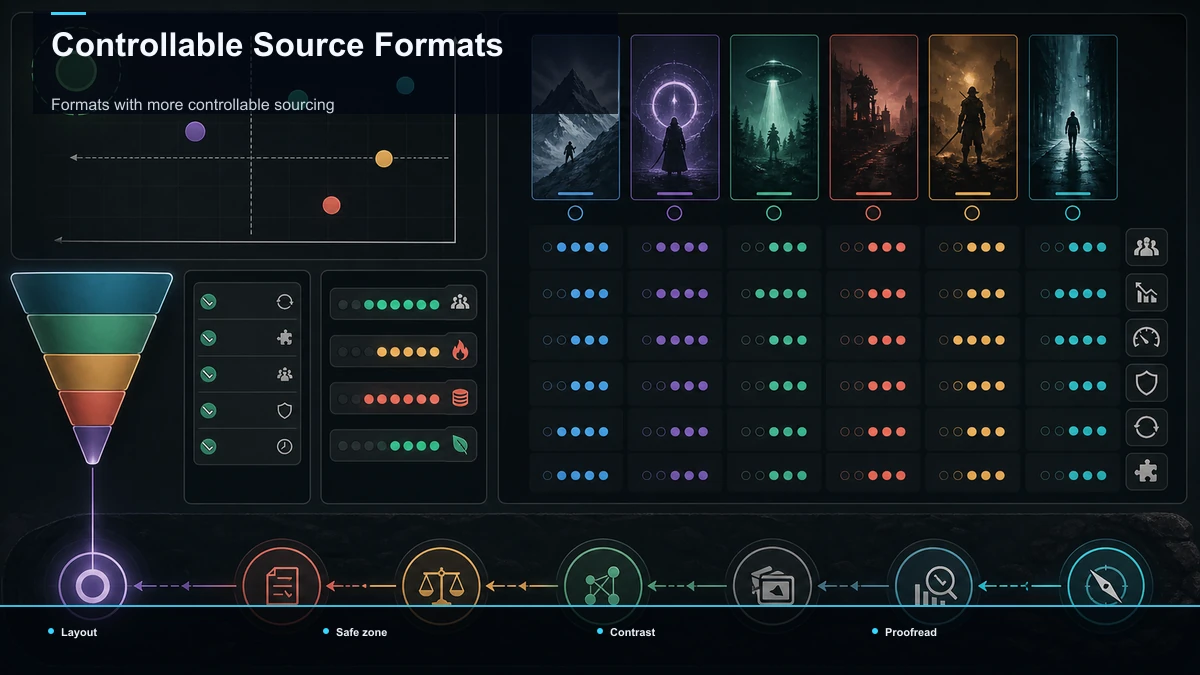
Formats with more controllable sourcing
Formats built mainly from your own research, narration, graphics, demonstrations, interviews, and screen recordings usually give you more control over documentation and corrections. Historical material can also be workable when the exact item is verified rather than assumed to be public domain from its age or title.
More control does not mean no risk. True-crime and business stories can raise accuracy, privacy, defamation, and financial-claims concerns. Product coverage can become outdated. Book commentary can still use protected text, translations, cover art, or audiobook audio. Build a source sheet for every episode and review the claim types that matter to that niche.
Formats with greater third-party rights dependence
Film, television, anime, music, and sports formats often depend more heavily on third-party audiovisual works. That makes permissions, excerpt selection, notice handling, and jurisdiction-specific analysis more important. It does not support a universal claim that one industry always enforces faster or that short excerpts are automatically permitted.
Before choosing one of these formats, create a pilot using material you are entitled to test. Document every excerpt, keep the script and edit decisions, and decide who reviews a Content ID claim, takedown request, or other platform notice. A tool can help edit footage; it cannot grant rights or predict a legal outcome.
The recap production line that works across every niche
Whatever niche you pick, the engine is the same: turn one source into a finished, captioned, vertical recap you can publish everywhere. In a browser-based workspace like Recapo — no install, and it accepts MP4, MOV, and the usual formats up to 6GB total per task — the pipeline runs like this:
- Lock your sourcing first. Record the source, owner, permission or other use rationale, territory, and attribution requirement for every visual and audio element before editing.
- Structure the script. Feed your research or a long source into the plot summary generator for a clean outline, then rewrite it in your own words so the video leads with your value.
- Add the voice. Generate narration with the voiceover maker so the channel stays genuinely faceless — nothing on camera, no need to record yourself.
- Clip and assemble. For footage-based niches, pull short, purposeful moments from a source you're entitled to use with the AI shorts maker.
- Caption everything. Burn in timed subtitles with auto-captions, then fix names and niche terms — captions improve accessibility and make the narration understandable when audio is unavailable.
- Reframe, cover, export. Resize to 9:16 for Shorts, Reels, and TikTok, add a cover, and export. Run the workflow on a small batch and record the time and corrections required before setting a publishing cadence.
This matters because a niche is only operationally sustainable when sourcing, review, and production can be repeated without skipping the controls the subject requires.
Pick a niche with a small, documented test
Shortlist two or three formats and produce three to five pilots for each with material you are entitled to use. Keep the publishing conditions comparable. Track source-clearance time, research and correction time, approved output, audience response at the same measurement horizon, revenue signals actually visible in your account, and any platform notices.
Choose the format whose evidence supports a repeatable process. A promising niche is one you can source, fact-check, review, and publish consistently; it is not simply the row with the most attractive generic CPM claim.
FAQ
Which faceless recap niche is safest? No topic is legally "safe" by category. Compare the exact sources and permissions required by your planned format. A workflow based on original or licensed inputs is generally easier to document than one that depends heavily on protected third-party material, but every video still needs its own review.
Which recap niche makes the most money? There is no reliable universal winner. Revenue depends on audience geography, season, advertiser demand, views, revenue mix, eligibility, and claims on the actual channel. Validate the idea with your own Analytics and documented costs rather than a generic niche RPM chart.
Are anime, film, or sports recaps automatically prohibited? No, and they are not automatically permitted either. The answer depends on the material, permission, purpose, amount, market effect, jurisdiction, and platform process. Use qualified advice when the project is commercially important or uncertain.
Can I run a recap channel without showing my face or using my own voice? Yes, as a production format. You still need rights to the script, voice, music, images, and footage, and you should review any synthetic-content disclosure rules that apply.
How many niches should I test? Two or three formats with three to five comparable pilots each is a practical starting experiment, not a statistical guarantee. The goal is to expose sourcing and production constraints before committing the brand.
Ready to test a recap niche with a documented pilot instead of committing from a generic ranking? Create a free Recapo account, bring one source you are entitled to use, produce a reviewed candidate from outline through export, and record clearance time, correction time, approved output, and audience response before setting a cadence.
References and official sources