How to Get More Views on YouTube Shorts (2026)
Improve YouTube Shorts with clearer hooks, one focused idea, readable captions, tighter edits, and tests based on retention and audience response.
By the Recapo.ai Editorial Team · Fact-checked July 10, 2026
No fixed hook length, clip duration, loop, caption style, upload count, or publishing cadence guarantees more YouTube Shorts views. YouTube exposes performance reports such as engaged views, "how many chose to view," retention, traffic sources, and audience data, but it does not publish a simple distribution formula or fixed weight for each editing choice.
This guide turns those reports into a controlled review process: make the premise clear, deliver a complete payoff, remove accessibility and framing problems, and compare meaningful variations against your own channel baseline.
Fact-check note: Platform rules and product limits were checked against official sources on July 10, 2026. They can change, so verify the linked source before acting on a threshold or specification.
Official source map: For diagnosing Shorts view growth, the discovery, Analytics, and format points below are tied to YouTube discovery guidance, Shorts Analytics documentation, YouTube's current Shorts creation guidance.
Key Takeaways
What you can measure in Shorts Analytics
YouTube's public guidance does not describe a mandatory small test pool that either expands or stops according to three fixed signals. Treat distribution as a multi-signal system and use the reports available to your channel.
Record several observations before changing the workflow. One Short cannot isolate the effect of a hook, length, caption style, topic, timing, and normal variation at once.
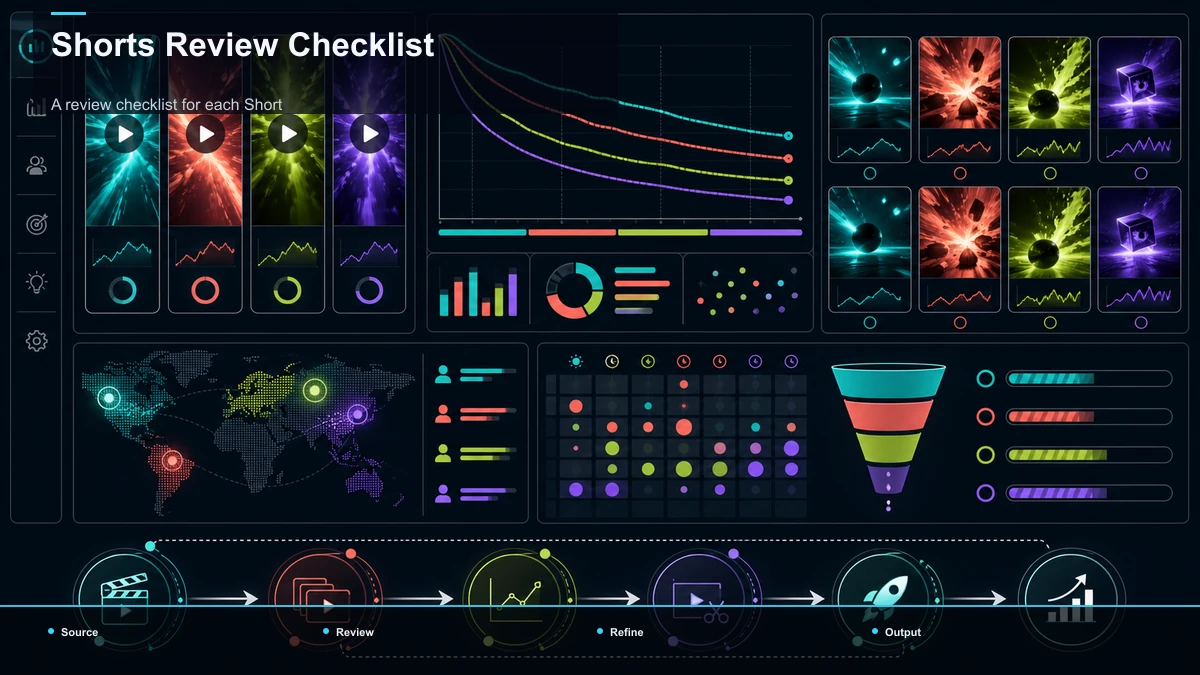
A review checklist for each Short
| Premise | Can a new viewer identify the subject and promised payoff? | Opening wording and chosen-to-view context | Payoff | Does the clip complete the idea without missing context? | Retention pattern and comments | Accessibility | Are captions accurate, readable, and clear of interface overlays? | Proofing notes and device preview | Framing | Does the 9:16 crop keep the important subject and text visible? | Phone preview and safe-area check | Rights and accuracy | Are source rights, claims, names, and figures documented? | Approval record | Test design | Is only one major creative variable changing? | Variant log and observation window |
The checklist improves review consistency. It does not represent published algorithm weights.
Make the premise clear without a fixed hook rule
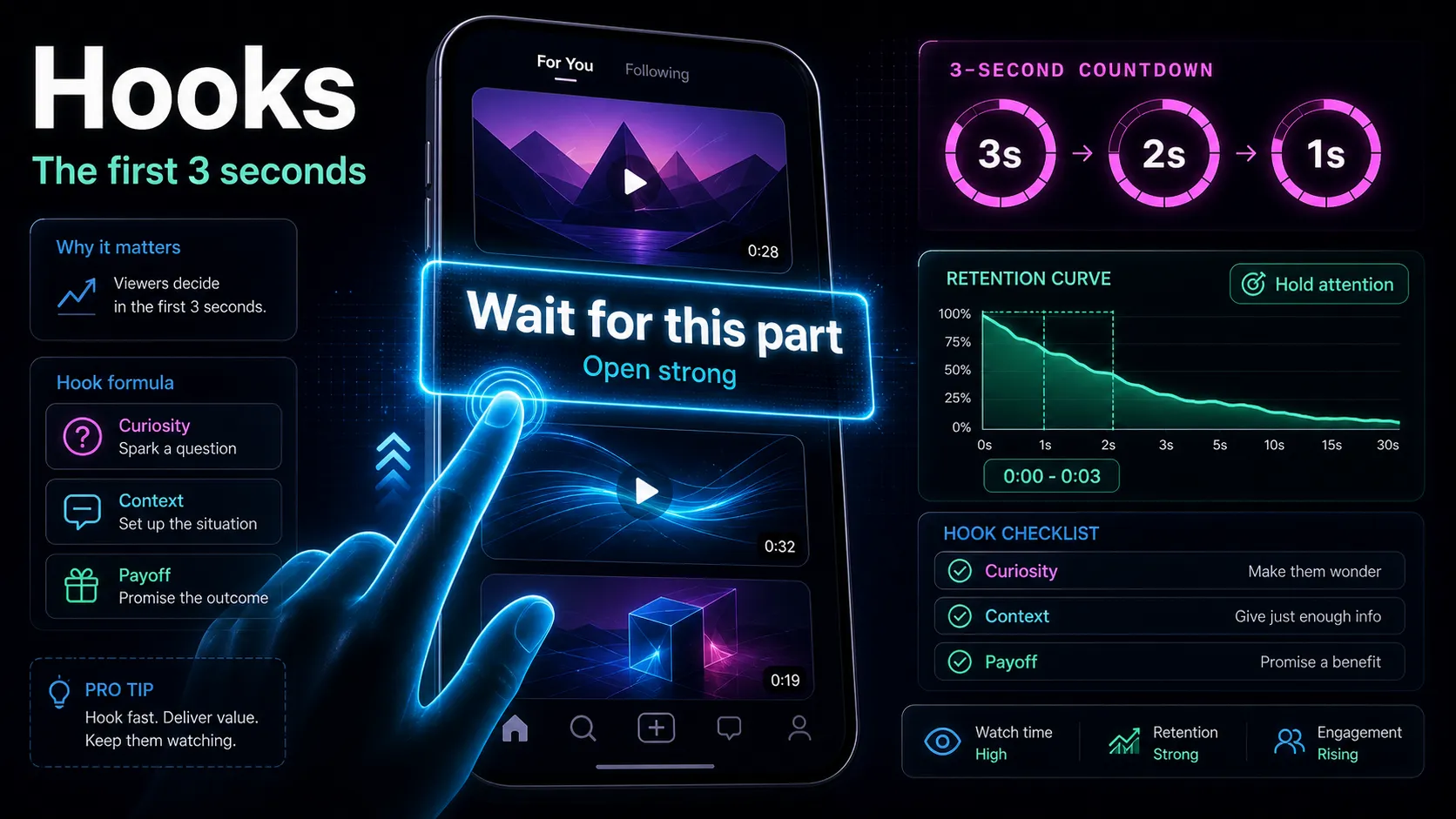
Remove greetings or setup that the viewer does not need, and show the subject or question as early as the idea allows. Some clips can establish that in one second; others need more context. YouTube does not publish a universal one-to-three-second hook requirement.
Test two openings on otherwise comparable clips: for example, a direct question versus the result first. Keep the promise accurate and compare chosen-to-view, retention, and qualitative response at the same age. A hook that overstates the payoff may attract an initial view but weaken trust and satisfaction.
Use loops selectively and caption for accessibility
A loop can suit a reveal, routine, demonstration, or repeating action, but it should not make the ending confusing or withhold the promised answer. Compare a looped and non-looped version when the concept supports both; do not assume a seamless restart automatically doubles meaningful watch time.
Accurate captions improve accessibility and help viewers follow the clip when audio is unavailable. Generate a draft with auto-captions, then correct names, brands, figures, and timing. Preview captions on a phone and keep them clear of interface overlays.
Let the idea determine length and pacing
There is no universal 15–35 second performance band. Use the shortest version that establishes the premise, supplies necessary context, and delivers the payoff. Test a shorter and longer cut when both remain complete.
Remove dead air and repeated setup, but preserve pauses needed for comprehension. Compare retention curves only across similar topics, formats, and observation windows. A shorter clip can improve completion while still being less useful, so review comments and downstream behavior alongside the curve.
Build a batch target from measured keeper yield
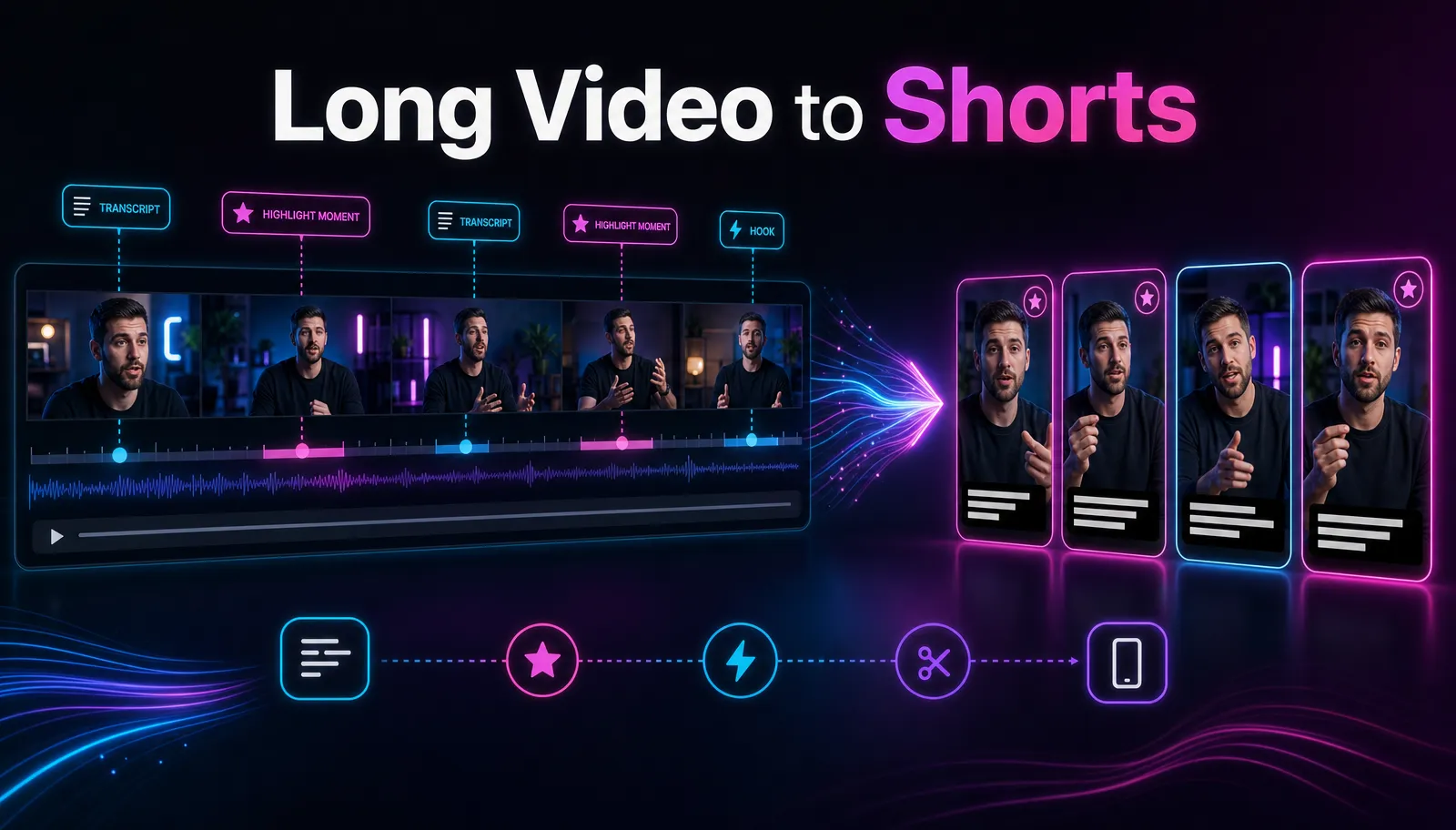
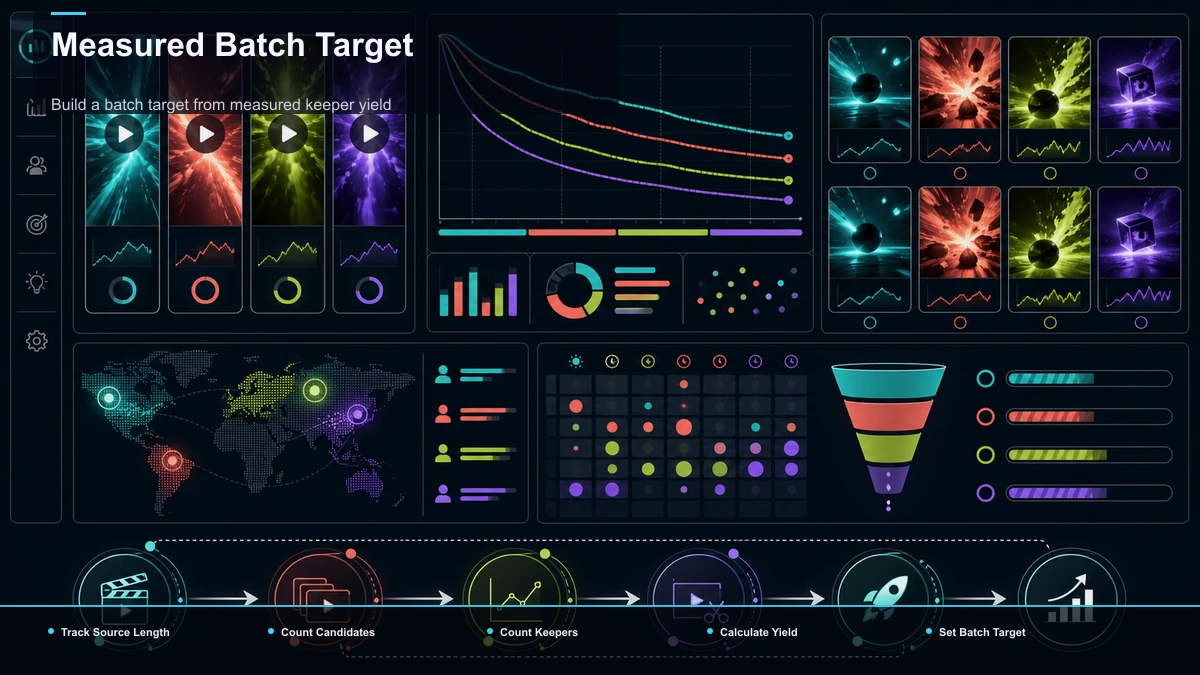
One long source may produce no approved Shorts or several; duration alone does not determine yield. Use source material you are entitled to repurpose, create candidate clips, and record how many survive editorial, rights, caption, and framing review.
| Source review | Confirm ownership, permission, contributors, and restrictions | Approved source record | Candidate selection | Surface self-contained moments manually or with an AI Shorts generator | Candidate count | Editorial review | Check premise, payoff, accuracy, and substantive difference | Keeper count and reasons | Finish | Reframe, caption, proofread, and preview | Revision time | Publish test | Release at a sustainable cadence | Same-age analytics | Decision | Keep, revise, or stop the format | Yield and performance baseline |
A browser workflow such as Recapo can reduce file handoffs across clipping, vertical reframing, captions, cover, and export. Test the actual time and correction load; do not assume a two-hour process, ten clips per week, or a fixed number of clips per source.
Measure Shorts in the role they actually play
A Short can generate a view, subscriber, related-video visit, search discovery, or no downstream action. Decide the intended role before publishing and measure the available result instead of assuming every Short is automatically a top-of-funnel asset.
When a related long-form video or series genuinely helps the viewer continue, connect it using YouTube's current features and track downstream traffic in Analytics. Keep the topic and promise consistent, but let account evidence show whether Shorts contribute to broader channel goals.
FAQ
Why are my Shorts not getting more views? There is no single diagnosis. Compare topic, traffic source, chosen-to-view behavior, retention, audience fit, policy status, and normal variation across several similar uploads.
How long should a YouTube Short be? Use the shortest complete version and test alternatives. YouTube does not publish one ideal duration for every topic or audience.
Do captions increase Shorts views? Captions improve accessibility and comprehension. YouTube does not publish a guaranteed distribution increase from adding them, so measure the result without reducing captions to an algorithm tactic.
How many Shorts can one long video produce? It depends on the source. Record candidate and approved clips after editorial and rights review rather than promising five, ten, or any other fixed yield.
Do Shorts grow long-form viewing? They can, but the result is channel-specific. Use related-video features where appropriate and check downstream traffic in Analytics.
Test one source against your channel baseline
Choose a source you are entitled to use, produce a small set of distinct candidates, and record keeper yield, revision time, chosen-to-view behavior, retention, traffic sources, and downstream viewing at fixed observation points. Create a free Recapo account to test clipping, vertical framing, captions, cover, and export in one browser workflow. No editing tool can guarantee distribution or views.
References and official sources