How to Remove a Watermark From Your Own Video Legally
Learn when removing a watermark from your own or authorized video may be appropriate, what to verify first, and where quality limits apply.
By Recapo Editorial Team · Updated 2026-07-28
Disclaimer: This article provides general product and operational information and does not constitute legal advice. Copyright requirements and platform rules may vary by country, region, and platform. Before processing, modifying, or publishing a video, confirm that you have the necessary rights, authorization, and permissions.
Internal legal review: Reviewed by Recapo's internal legal team. Recapo's public Terms require users to have the necessary rights and permissions for uploaded content, but the current add-watermark and remove-watermark tool pages do not include a separate ownership or authorization checkbox.
There are legitimate reasons to remove a watermark: a company may be updating its own logo, a creator may have lost the clean export of an original project, or an authorized agency may need to repurpose a client's approved asset.
There are also situations where removal is inappropriate. A visible watermark can identify the owner, licensor, platform, or source. Removing it from someone else's content may violate copyright, license terms, contracts, or platform rules.
The safe starting point is not the tool. It is the rights check.
Product and policy check (July 28, 2026): Recapo does not currently publish a separate copyright or DMCA page. Copyright and intellectual-property rules appear in Section 3 of the Terms of Service, while the user's content representations and the service's license to process content appear in later sections. The Terms-level promise is not the same as an in-product confirmation at upload time.
 Check ownership, permission, and license terms before removing a watermark.
Confirm your rights before processing the video
Only continue when at least one clear basis applies:
- You created and own the video and the watermark.
- Your organization owns the video and has authorized you to edit it.
- The copyright owner gave you explicit permission covering this use.
- A license or contract clearly allows the modification.
- Qualified legal review confirms another lawful basis in the relevant jurisdiction.
Keep records such as the project file, source export, contract, written permission, asset-management entry, or other proof of authorization.
Do not rely on weak assumptions such as:
- “The video is already online.”
- “I credited the creator.”
- “I only need a small section.”
- “The watermark is inconvenient.”
- “The content has no visible copyright notice.”
YouTube's official copyright guidance explains that creators usually own copyright in their original work and identifies permission, applicable copyright exceptions, public-domain status, and appropriate licenses as possible routes for using protected content. The rules and exceptions vary by region.
Legitimate use cases
Updating your own brand
A company may need to remove an outdated logo before adding current branding. Use the original clean project when available because it generally produces a better result than reconstructing pixels behind a watermark.
Recovering an old self-produced export
A creator may have only a watermarked copy of an earlier project. Keep evidence that the creator owns the original work and watermark.
Editing for an authorized client
An agency or freelancer may have permission to modify the client's asset. Confirm that the scope includes removing or replacing branding and keeping a new copy.
Correcting a mistakenly watermarked internal asset
An organization may have applied the wrong department, campaign, or draft mark to its own file. Record the source and approval before processing.
Situations that require a stop
Do not use the workflow to:
- remove another creator's attribution;
- conceal the origin of licensed stock or platform content;
- evade a purchase, subscription, or licensing requirement;
- republish another person's video as your own;
- remove an ownership or rights-management mark without authorization;
- bypass platform or contractual restrictions.
When ownership, licensing, or a copyright exception is uncertain, pause and obtain qualified advice.
How to process an authorized video
1. Keep the original and rights record
Store the original separately. Record who owns the video, who approved the change, and what the new file will be used for.
2. Test a short section first
Watermark removal can affect detail, texture, movement, and objects behind the mark. A short test reveals whether the result is acceptable before processing the full file.
3. Select only the marked area
Avoid changing a larger region than necessary. Review frames where the background changes or an object passes behind the mark.
4. Inspect the result
Look for blur, repeated texture, flicker, warped edges, color mismatch, and temporal inconsistency. Moving marks and complex backgrounds may be more difficult than static marks on simple areas.
5. Export and document the new version
Use a versioned filename, record the edit, and preserve the approval. Do not misrepresent the result's source or ownership.
Current localized tools include hapus watermark video milik Anda and remover marca d’água do seu vídeo. The same Terms-level rights requirement and absence of a separate tool-page authorization checkbox apply.
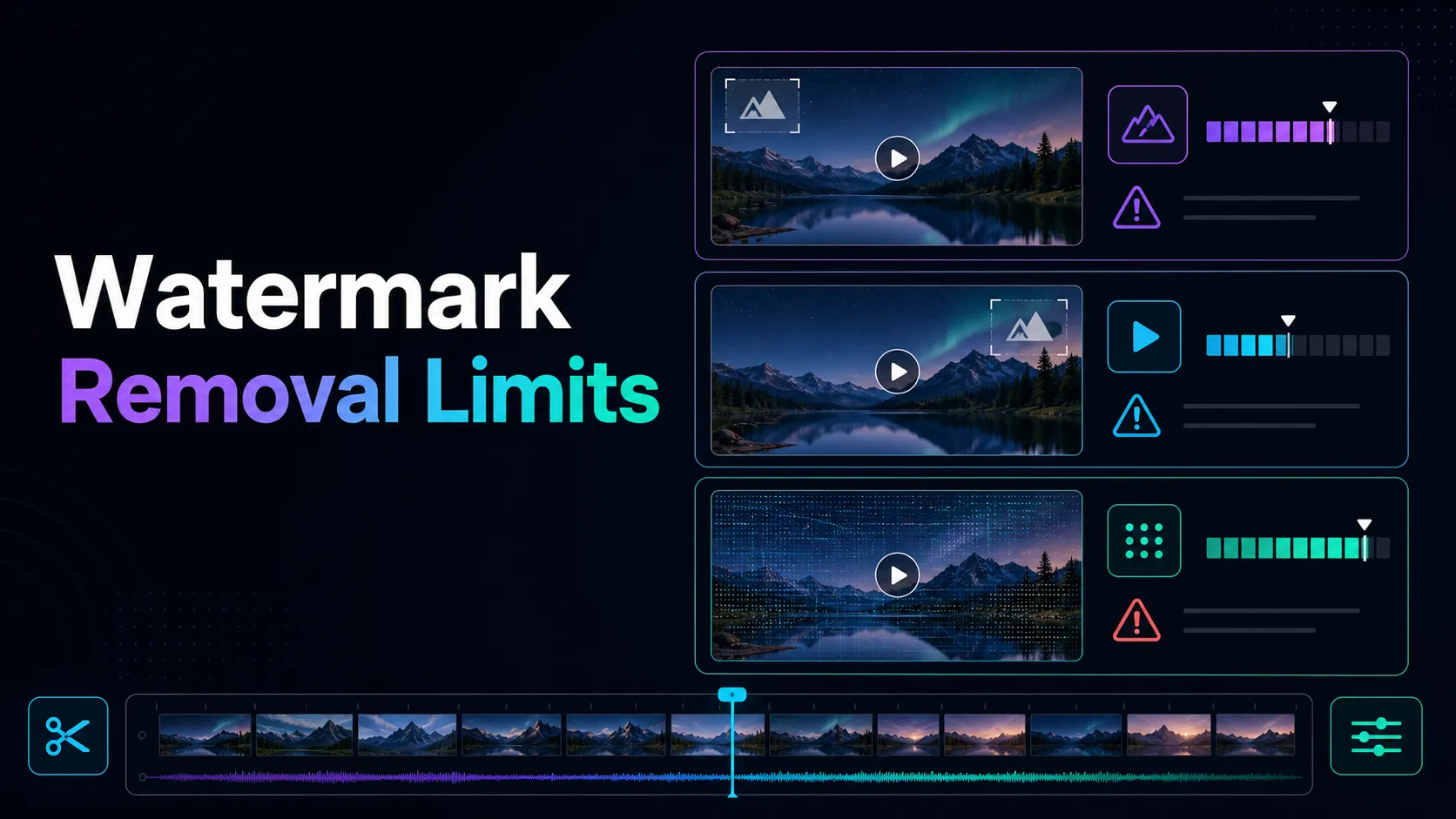
Quality limitations
Results depend on:
- whether the mark moves;
- the size and opacity of the mark;
- the detail behind it;
- camera movement;
- compression artifacts;
- how long the mark remains visible;
- whether foreground objects cross the marked area.
A trustworthy page should show both successful and unsuccessful authorized examples. Do not promise a clean result for every video.
Better alternatives when available
Before reconstructing the image, check whether you can:
- reopen the original project and disable the watermark layer;
- obtain a clean export from the rights holder;
- replace the shot with another authorized source;
- crop the frame without harming the composition;
- cover your own old logo with approved new branding.
These options may preserve more quality and create a clearer rights trail.
Frequently asked questions
Can I remove a watermark if I give credit?
Credit alone does not establish permission. Review the ownership, license, contract, platform rules, and applicable law.
Can I remove a watermark from content I purchased?
A purchase may grant limited rights rather than full ownership. Check the exact license and obtain advice when unclear.
Is every watermark removable without visible damage?
No. Moving marks, large areas, detailed backgrounds, and foreground crossings can produce visible artifacts.
What evidence should I keep?
Keep the source file, project record, contract or written permission, approver, date, intended use, and exported version.
Does this article determine whether my use is legal?
No. It provides a rights-check framework, not a legal conclusion for a specific case.
Rights first, processing second
Watermark removal should be limited to content you own or are clearly authorized to modify. Confirm the rights, preserve the evidence, test a short section, and be honest about quality limitations.
CTA: Confirm that you own or are authorized to modify the video before using Recapo's video watermark remover.